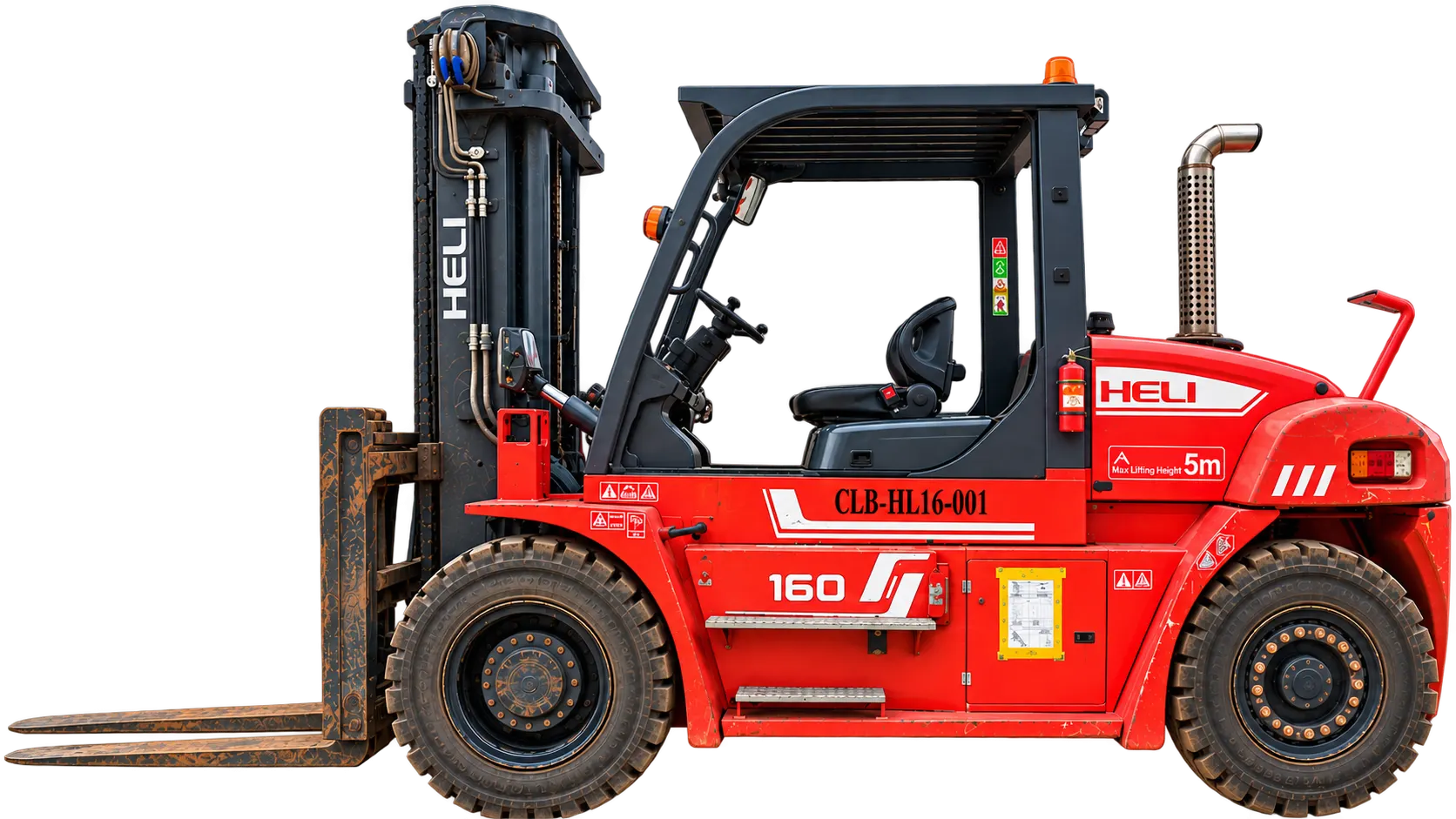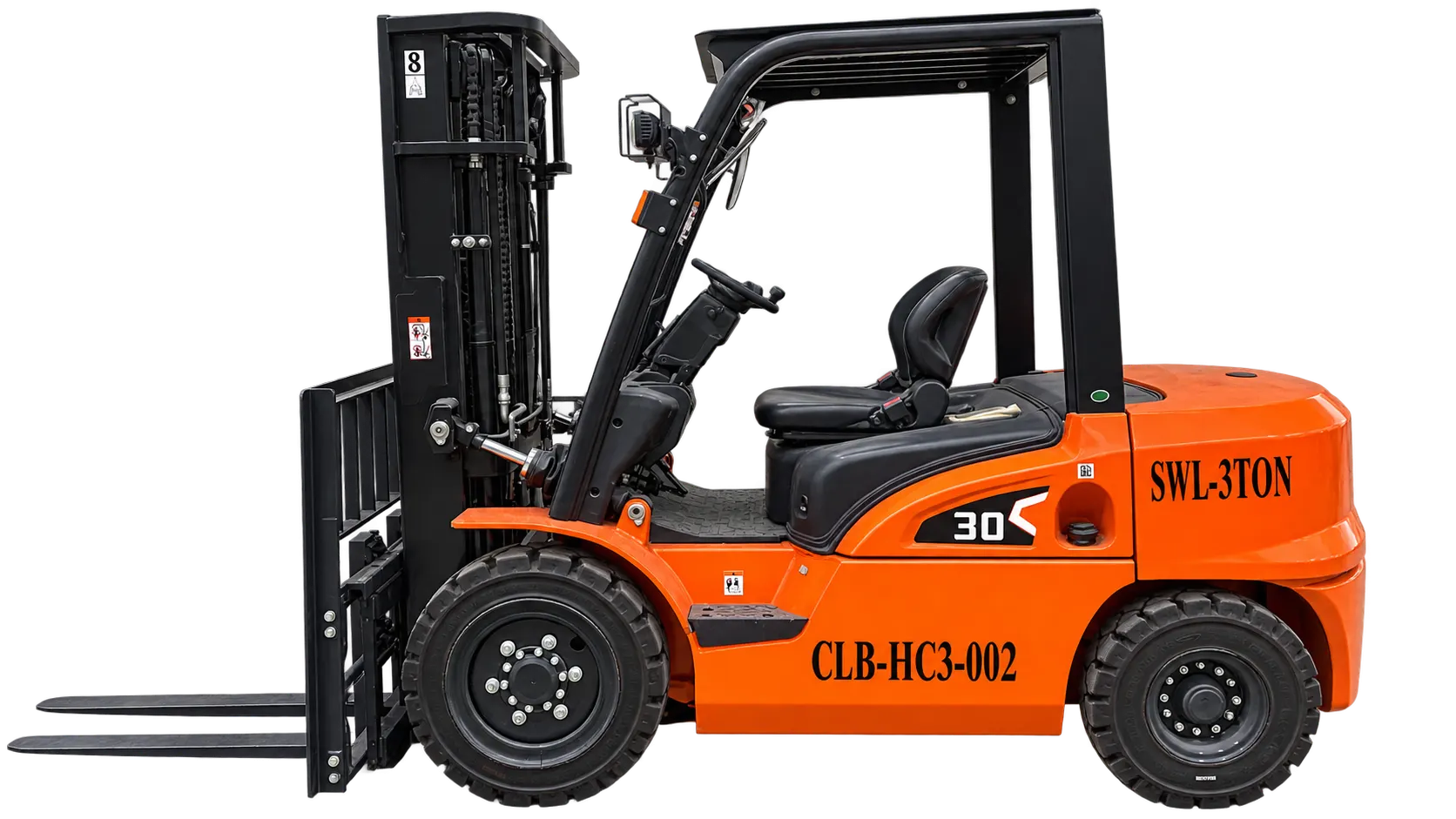




A 16 ton forklift carrying a full load presses close to 40 tonnes onto the floor. In Batam's shipyards and ports, loads above 10 tonnes such as steel blocks, coils, fabrication modules and crated machinery demand more than the tonnage on the plate. You need to confirm the unit can lift the load at its actual centre of gravity, the floor or quay can carry the unit plus the load, and the unit has room to manoeuvre on site.
This guide covers heavy-capacity forklifts from 10 to 25 tonnes. For the 2.5–7 ton classes, read how to choose a rental forklift.
10–25 ton forklifts available for hire
| Class | Brands | Load centre | Standard lift height | Offer |
|---|---|---|---|---|
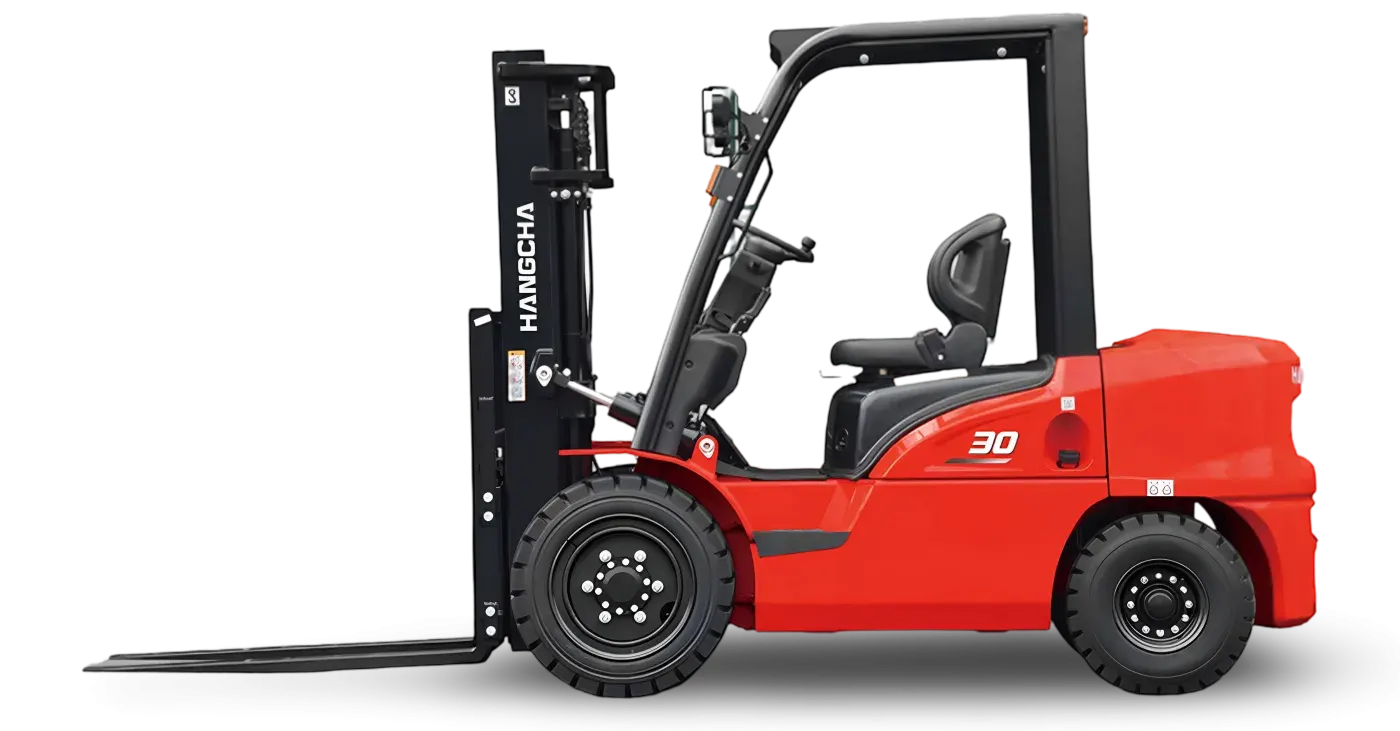
| 10 ton | Hangcha (lead brand), Heli, Hyster, TCM | 600 mm | 4 m (option up to 4.5 m) | Rent & buy |
| 15 ton | Heli | 600 mm | 3 m | Rent |
| 16 ton | Heli, Cummins engine | 600 mm | 5 m | Rent |
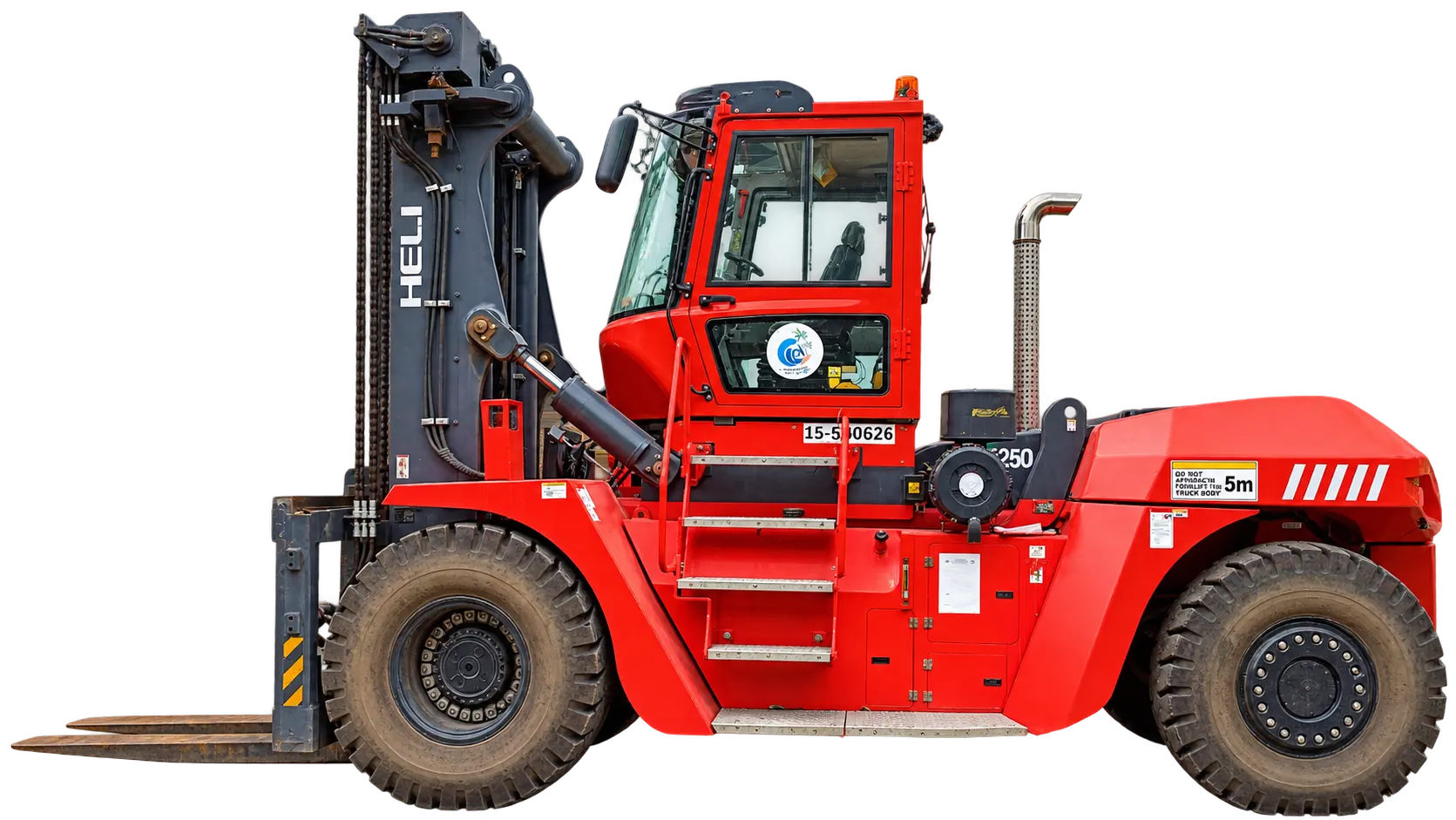
| 25 ton | Heli CPCD250 | 1,200 mm | Confirmed with your quote | Rent |
Every unit in this range is diesel-powered and usually hired per project with our team's support.
The rated capacity isn't always the capacity on site
A forklift's capacity is stated at a specific load centre: the distance from the front face of the forks to the load's centre of gravity. Our 10, 15 and 16 ton forklifts are rated at a 600 mm load centre; the 25 ton forklift at 1,200 mm.
If your load's centre of gravity sits further out than that, as with a long machinery crate or an asymmetric load, the real capacity drops. A safe rough estimate:
Real capacity ≈ rated capacity × rated load centre ÷ load's load centre
Example: a 10 ton forklift (600 mm load centre) lifting a crate whose centre of gravity is 900 mm from the forks is only safe for about 10 × 600 ÷ 900 ≈ 6.7 tonnes. The formula is deliberately conservative; the official figures are on each unit's load chart and capacity plate.
That is why the 25 ton class uses a 1,200 mm load centre: it is built for big, long loads. As a rough comparison, a 16 ton forklift lifting a load with a 1,200 mm load centre is only safe for about 8 tonnes. So for long modules or structures, choose the class by the size and centre of gravity of the load, not its weight alone.
Work out the total weight on floors, quays and ramps
Heavy forklifts are heavy machines. The unit's own weight has to be added to the load:
- 10 ton forklift: 12,300–12,660 kg unit weight, so about 22–23 tonnes in total at full load.
- 16 ton forklift: 23,500 kg unit weight, so close to 40 tonnes in total at full load.
When lifting, most of that weight sits on the front wheels. Before the unit arrives, make sure:
- the warehouse floor, quay or barge deck can carry that load;
- drain covers, steel plates and concrete joints along the route won't give way;
- soft ground or fresh fill is compacted or covered with steel plates;
- ramps have a gentle gradient, because a heavily loaded forklift must travel slowly and straight on a slope.
Manoeuvring space and site access
Our 10 ton forklift has a turning radius of about 3,900 mm and the 16 ton about 4,500 mm. Add the length of the load to work out the turning space you need. Also check:
- gate and aisle widths along the whole route;
- door heights, roofs and overhead power lines, because the mast and cab of a heavy unit are far taller than a 3 ton forklift's;
- travel distance: heavy forklifts are efficient over short to medium distances within one work area.
Heavy forklift or crane?
Both lift heavy loads, but they suit different jobs.
Choose a 10–25 ton forklift when:
- the load moves horizontally on hard, level ground;
- the work is repetitive, such as handling many crates or coils in a day;
- the load has fork pockets or timber skids the forks can slide under.
Choose a crane when:
- the load has to be lifted high or over obstacles;
- the load goes onto or off a vessel, or sits far from where the machine can stand;
- the ground is uneven or can't take a loaded forklift;
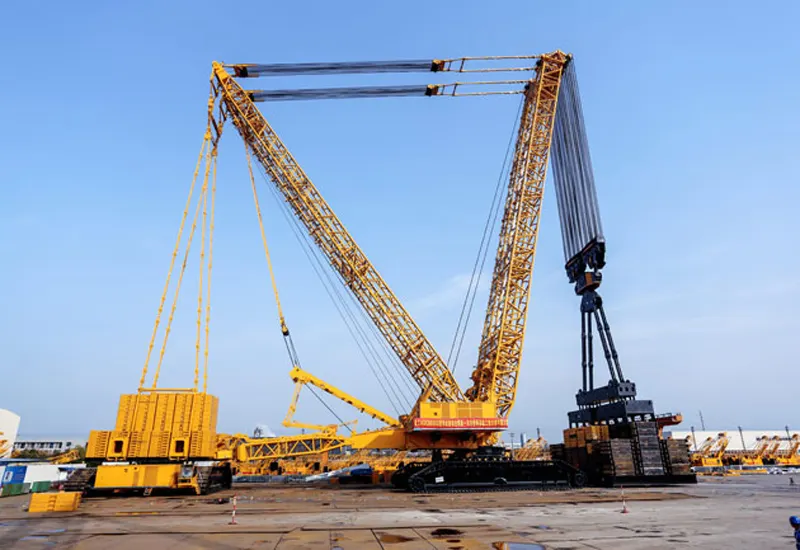
- the load weighs more than 25 tonnes.
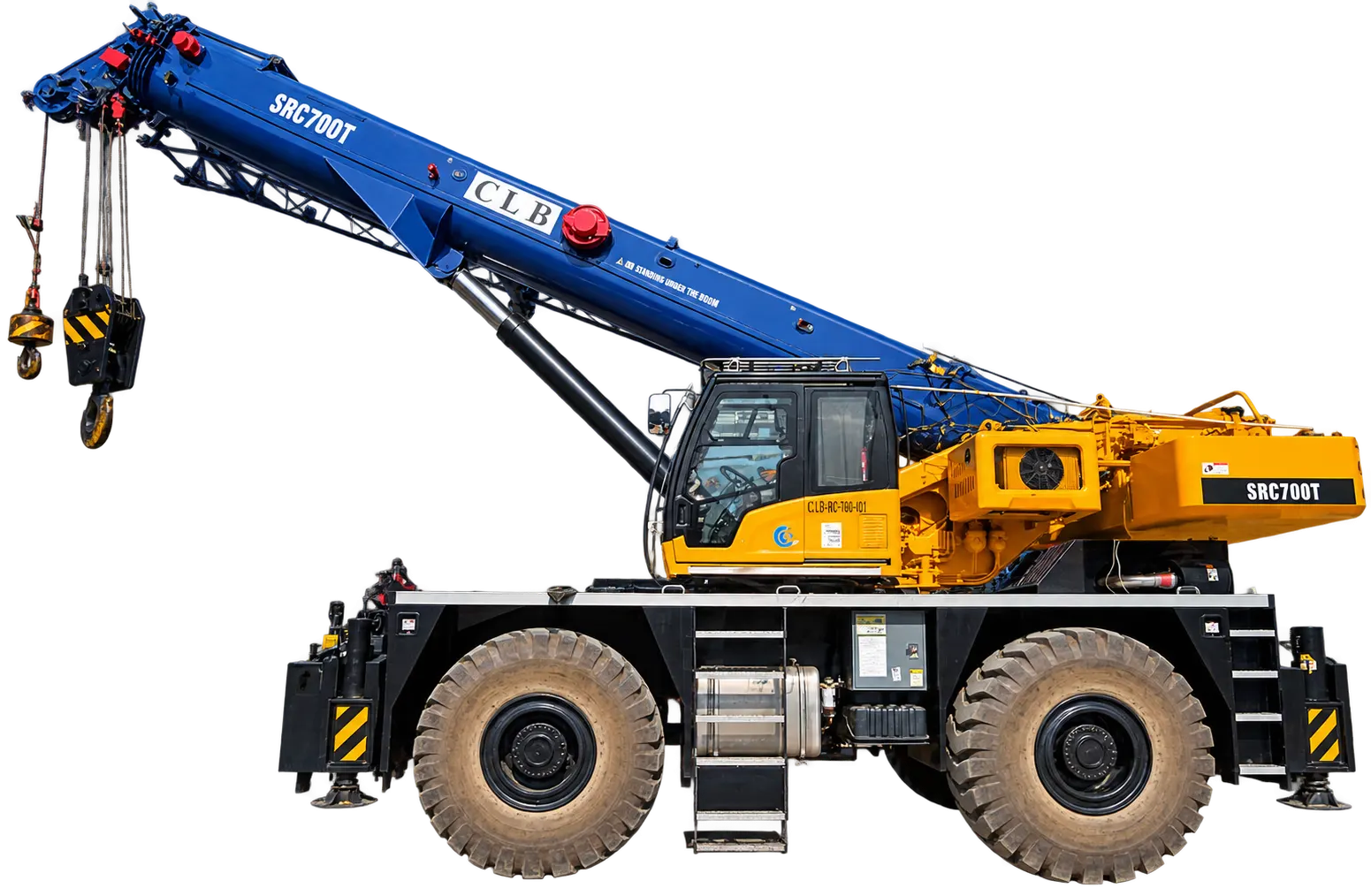
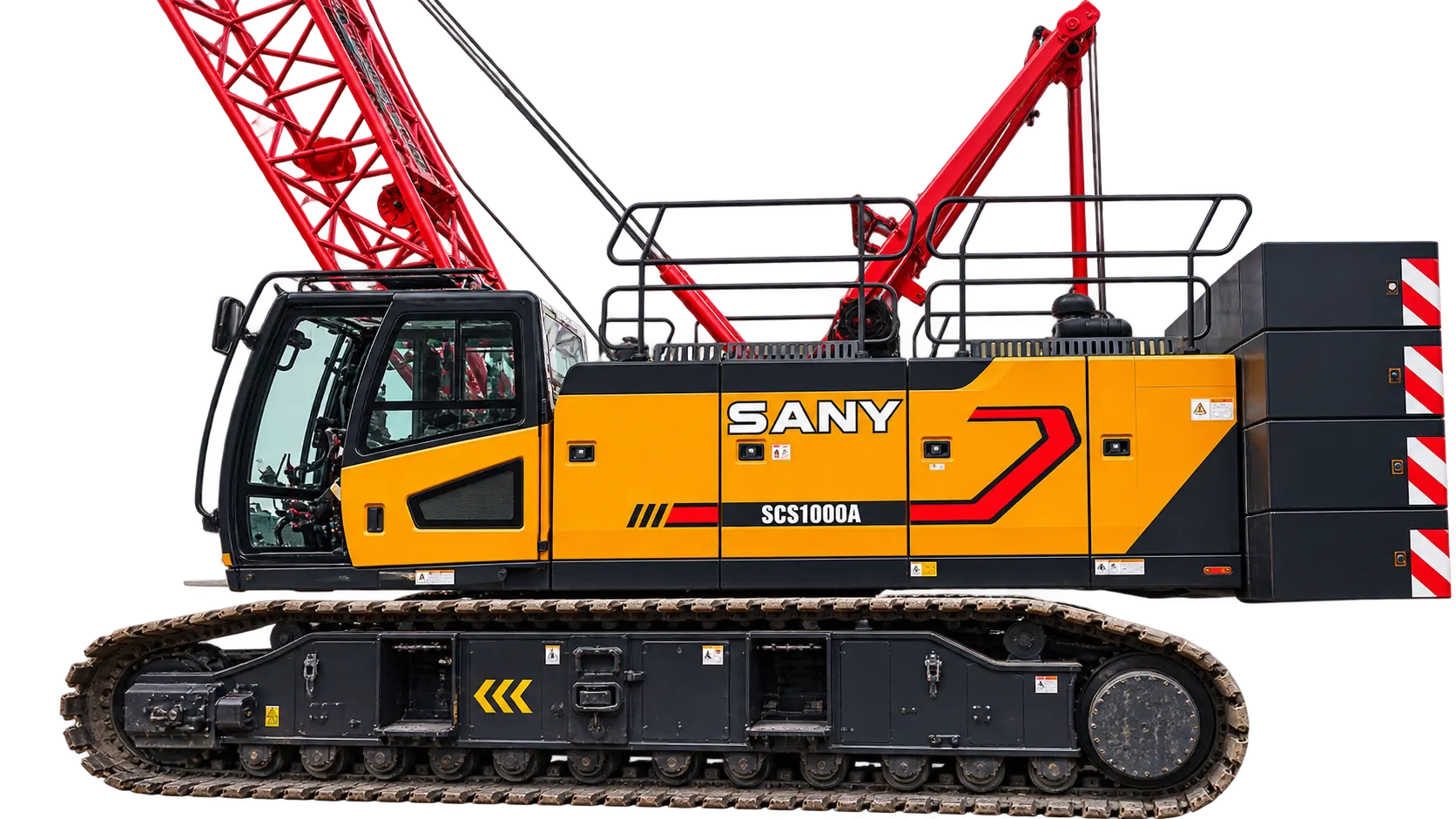
For crane lifts, see our mobile cranes, crawler cranes and loader cranes, plus the guide on how to choose a crane.
Working in Batu Ampar and port areas
Much of Batam's heavy forklift work happens around the ports and shipyards of Batu Ampar, Kabil and Tanjung Uncang. PT Citra Lautan Biru's office is at Jl. Kerapu No. 1, Batu Ampar, so for jobs in this area our team can survey the site without crossing the city. See also our heavy equipment rental in Batu Ampar page.
A few things to plan for:
- Entry permits and HSE induction. Port areas and some industrial estates require permits for operators and delivery vehicles. Tell us early so the paperwork is ready before the unit arrives.
- Mobilisation by trailer. Forklifts in this class aren't practical to drive long distances on public roads, so they are usually moved by trailer. Agree delivery and collection dates up front.
- Other areas of Batam. We also serve Kabil, Tanjung Uncang and the rest of Batam island.
What drives the cost of hiring a 10–25 ton forklift?
The rental price of a heavy forklift isn't set by its class alone. The biggest factors:
- Capacity class: the bigger the unit, the higher the rate.
- Rental period: daily, weekly and monthly hire are available. For long projects a monthly rental is usually cheaper.
- Operator: hire with or without an operator.
- Mobilisation and demobilisation: the distance to site and the trailer needed to deliver and collect the unit.
- Working hours: a single shift costs differently from overtime or double shifts.
What to send when you ask for a quote
- Weight, dimensions and approximate centre of gravity of the heaviest load
- Whether the load has fork pockets or timber skids
- The lift height you need
- Work location, floor or ground conditions, and the travel route
- Rental period and start date
- Whether you need an operator, and any site permits that apply
Ready to hire a heavy-capacity forklift?
See our 10 ton, 15 ton, 16 ton and 25 ton forklifts, or every unit on our forklift rental in Batam page. Send the details above on WhatsApp, and our team replies with a unit recommendation and a quote for your job.