



An undersized generator trips when a big motor starts. An oversized one burns diesel and rental money on power you never use. You can work out the right size in four steps with a calculator and a list of your equipment.
The short formula
Add up the power of every load running at the same time (kW), add the surge when the largest motor starts, then divide by the 0.8 power factor to get kVA. Choose a generator that runs at about 70–80% of its capacity under normal load.
1. Understand kVA and kW
Manufacturers rate generators in kVA (apparent power), while equipment nameplates usually show kW (real power). For a three-phase generator, the two are linked by the standard 0.8 power factor:
- kW = kVA × 0.8
- kVA = kW ÷ 0.8
A 100 kVA generator supplies about 80 kW of real load.
2. List every load
Write down each piece of equipment that runs at the same time, with its power. You'll find it on the nameplate or in the manual.
| Load type | Examples | Notes |
|---|---|---|
| Resistive | Lights, heaters, office sockets | Starting power equals running power |
| Motors | Pumps, compressors, air conditioners, electric hoists | Surge on start-up |
| Electronic | Computers, chargers, inverter welders | Need a stable voltage |
3. Allow for motor starting surges
An electric motor draws several times its running current as it starts. With direct-on-line (DOL) starting, the surge can reach 5–7 times the running current. A soft starter cuts that to about 2–4 times, and a variable-speed drive (VFD) almost removes it.
The generator has to carry the surge of the largest motor while the other loads are already running. Start large motors one at a time so their surges don't stack.
4. Choose prime or standby rating
A generator datasheet lists two ratings:
- Standby: for backup power during a grid outage. It isn't meant for continuous load and has no overload reserve.
- Prime: for a generator that is the main power source on site, with unlimited running hours and a varying load.
If the generator is your site's main supply, size it on prime power.
Worked example: a site office
| Load | Running power |
|---|---|
| Lights and sockets | 3.0 kW |
| 4 × 1 HP split air conditioners (±0.9 kW) | 3.6 kW |
| Water pump | 1.5 kW |
| Total running load | 8.1 kW |
- Running load: 8.1 kW ÷ 0.8 = ±10 kVA.
- The pump's DOL start (±6×) adds about 7.5 kW for a moment. The peak is about 15.6 kW ÷ 0.8 = ±19.5 kVA.
- A 22 kVA generator covers that surge and stays in a safe range under normal load.
Generator size chart
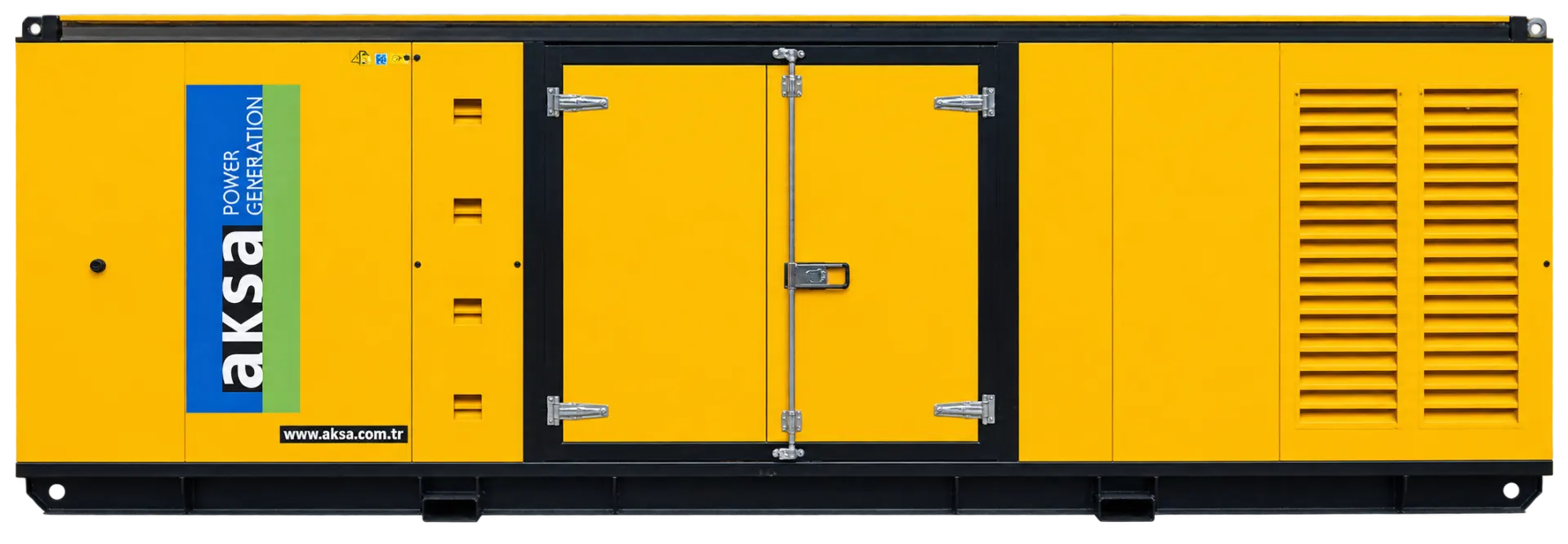
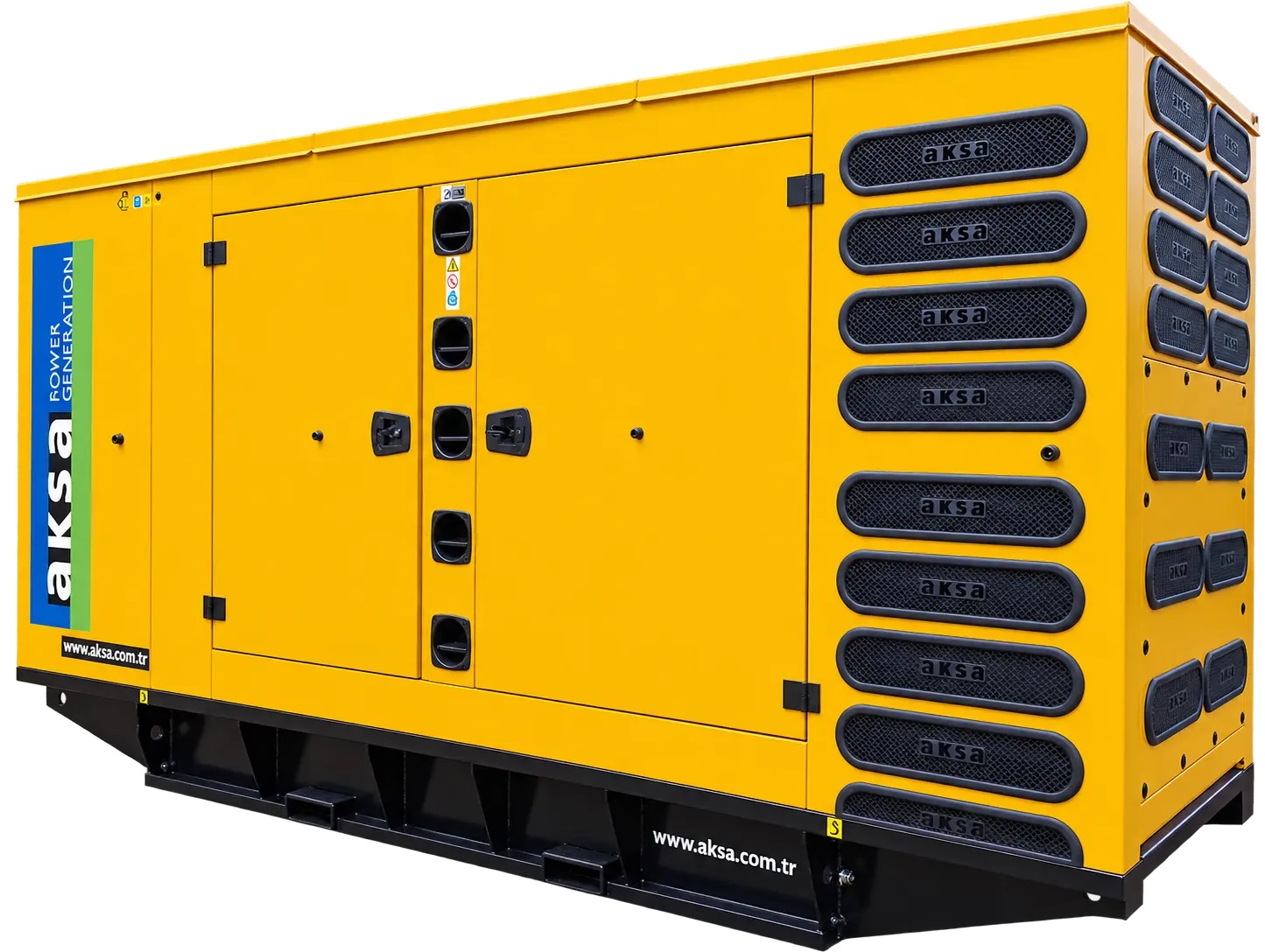
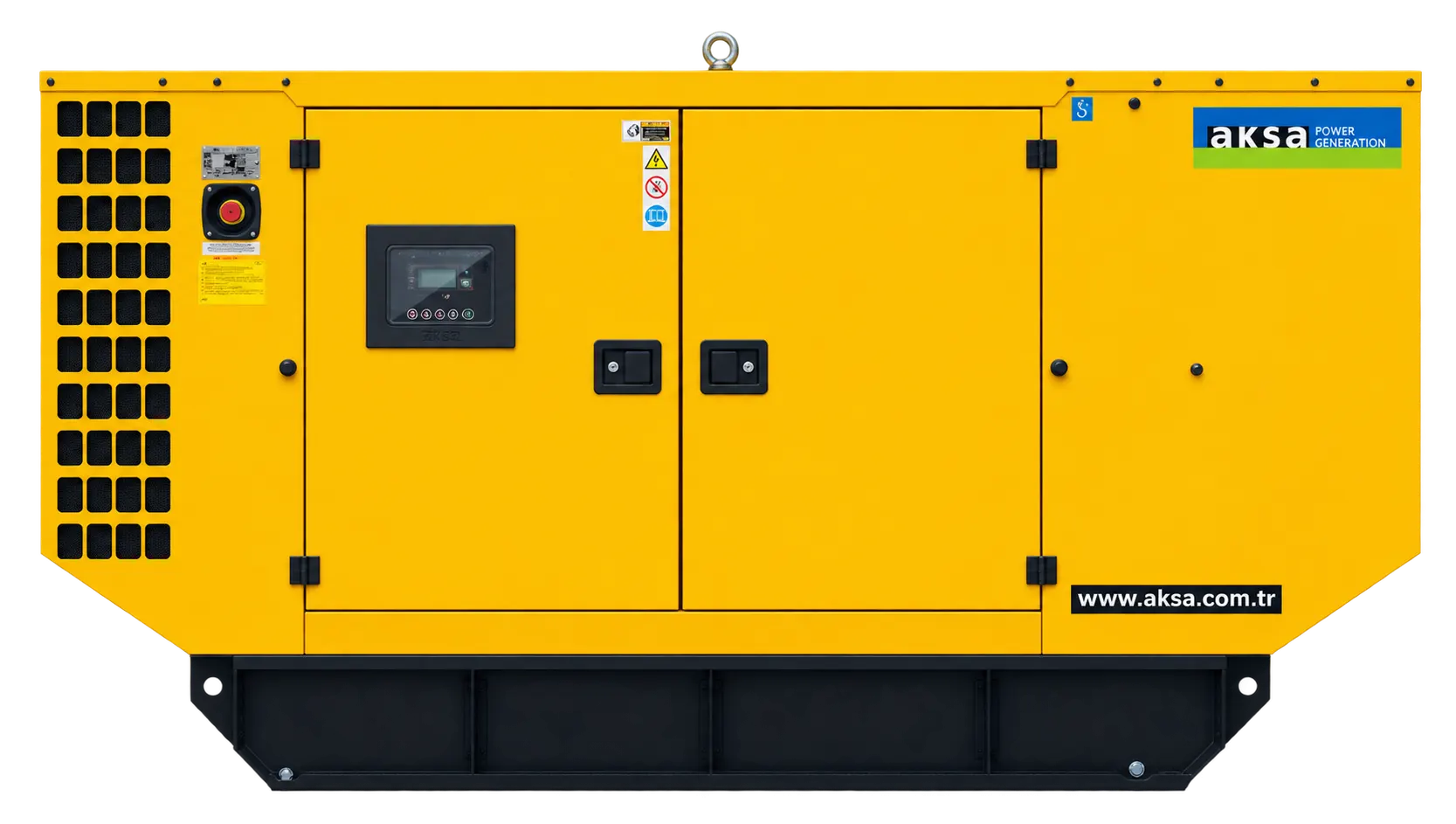
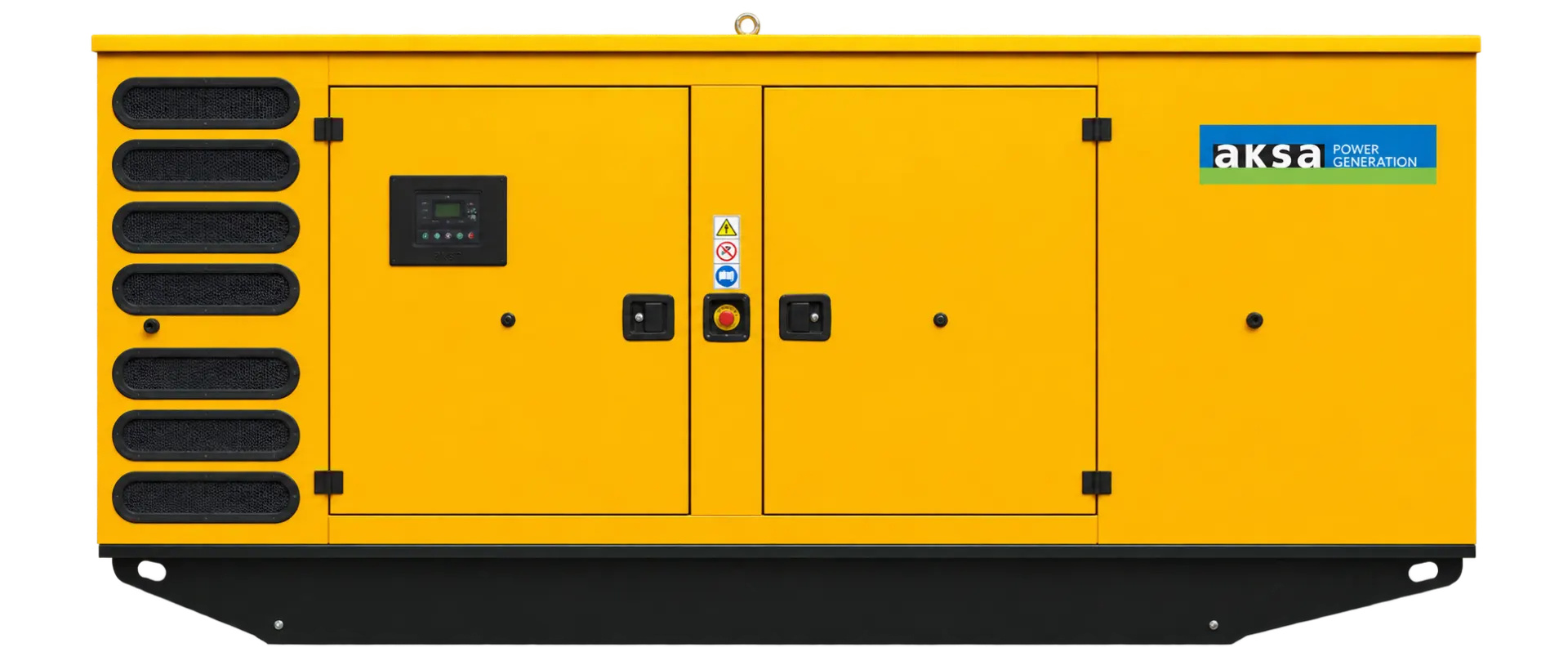
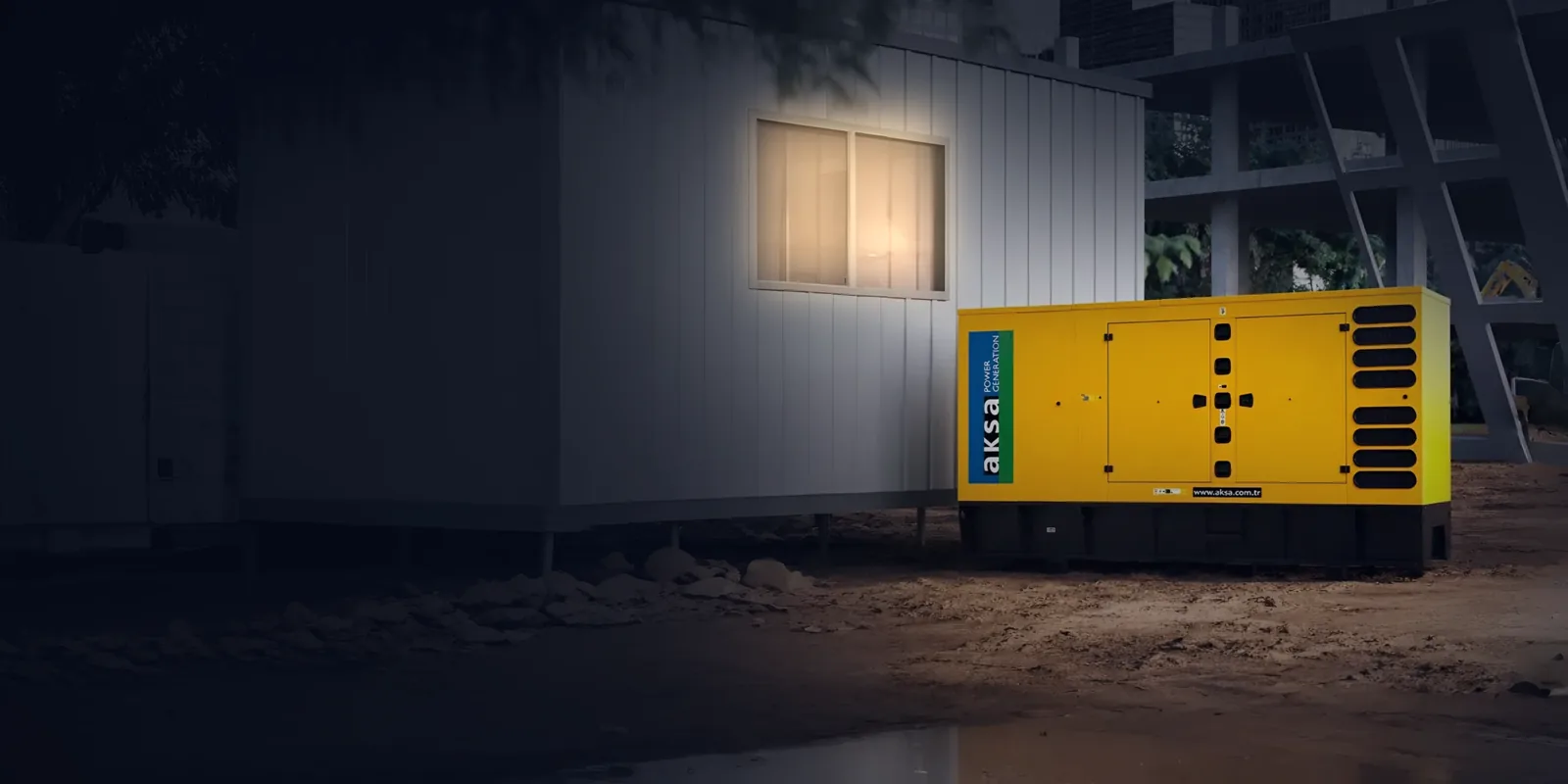
AKSA generator sizes you can hire or buy from us, with ratings from the manufacturer's datasheets:
| Size | Standby | Prime | Typical use | Units |
|---|---|---|---|---|
| 22–25 kVA | 17.6–20 kW | 16–18.4 kW | Shophouses, shops, small site offices | APD22C, APD25BD |
| 66–70 kVA | 52.8–56 kW | 48–50.4 kW | Offices, clinics, small warehouses | APD66C, APD70BD |
| 110 kVA | 88 kW | 80 kW | Large offices, workshops | APD110C, APD110BD |
| 165–220 kVA | 132–176 kW | 120–160 kW | Factories, workshops, cold storage | APD165BD, APD175C, APD220C |
| 310–475 kVA | 248–380 kW | 223.2–352 kW | Mid-size factories, buildings | APD310C, APD475C |
| 550–1,100 kVA | 440–880 kW | 400–800 kW | Large factories, shipyards | AVP550, AC550K, AC1100K |
Don't oversize
A diesel engine that runs below about 30% of its capacity for long periods never reaches its proper working temperature. Fuel doesn't burn completely and builds up in the exhaust (wet stacking). As an estimate, a diesel generator burns 0.25–0.3 litres of fuel per kWh. A 100 kVA generator carrying 60 kW uses about 15–18 litres an hour. The exact figure is on the unit's datasheet.
Voltage and frequency
Indonesia's grid runs at 400/230 V, 50 Hz, and every generator in our fleet runs at 50 Hz. Check imported equipment designed for 60 Hz before you connect it.
Send us your equipment list
Send your equipment list with power ratings on WhatsApp. Our team works out the right size from the generators available and prepares a daily, weekly or monthly rental quote. For backup during grid outages, read our generator guide for Batam blackouts.